




Schools today create and keep track of huge amounts of institutional data. Schools need to keep accurate records of all the data that comes in during each stage of a student’s life, from admissions records and grades to attendance logs and financial transactions.
But a lot of schools still use a mix of spreadsheets, software tools that don’t talk to each other, and manual recordkeeping methods. When data is spread out over several systems, administrators often have trouble with duplicate records, reports that don’t match, and having to spend a lot of time reconciling data.
A Student Information System (SIS) solves these problems by giving departments a single place to keep track of all student information. Modern student information systems for schools make it easier for schools to organize, automate, and analyze data, which helps them make better decisions about academics and administration.
Here are seven ways that student information systems make it easier for schools to manage their data, along with some information about how these systems help schools run more smoothly.
Table of Contents
Why is it getting harder for schools to manage their data
Modern schools collect a lot of data about admissions, academics, finances, and student engagement. As schools add more programs, use digital learning platforms, and run more than one campus, the amount and types of institutional data keep growing. Without centralized systems, this information is often spread out across departments, which makes it hard to manage, keep track of, and use effectively.
Schools usually keep track of many different types of data about students over the course of their lives, such as:
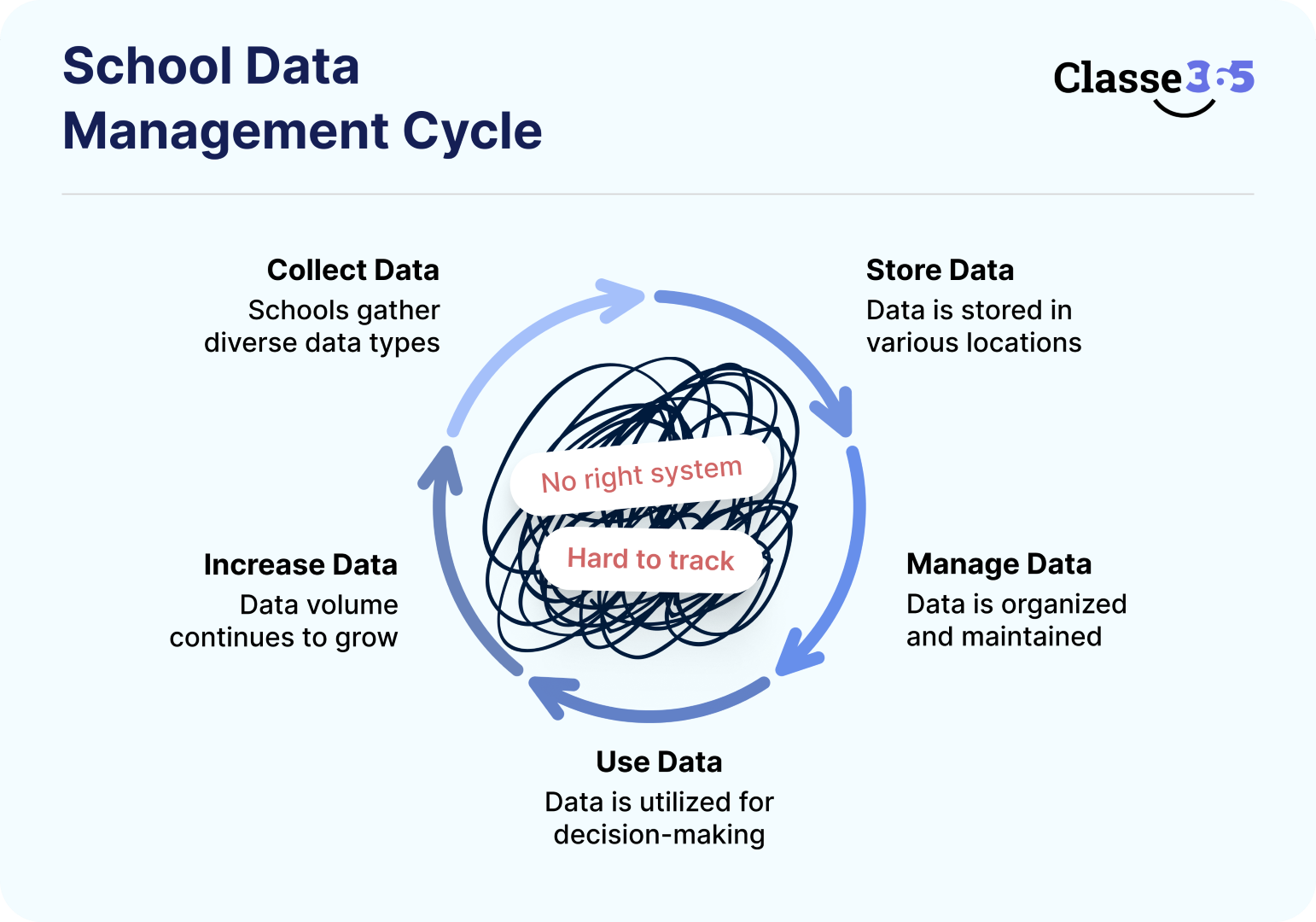
Increasing Amount of Institutional Data
Schools keep track of a lot of different kinds of data about students over their whole time in school. Some common groups are:
- Information about the students’ demographics
- Data on admissions and enrollment
- Grades and Academic Records
- Keeping track of attendance and test scores
- Records of Disciplinary Action
- Payments and transactions in money
- Records of communication with parents and students
As schools add more classes, campuses, and online learning spaces, the amount of data they produce keeps growing quickly.
If you don’t have the right systems in place, it can be hard to keep track of all this information.
The Issue with Broken Data Systems
Many schools still keep institutional data in more than one tool, such as:
- Sheets of paper
- Old Databases
- Software for Admissions
- Systems for Managing Learning
- Platforms for accounting
Because these systems don’t always work together, data has to be moved between departments by hand.
Micro Insight
In a lot of schools, the admissions teams, academic departments, and finance offices keep separate records for the same student. This causes duplicate entries, inconsistent data, and reporting errors over time.
A school data management system, like a SIS, solves these problems by giving all of the school’s data a central place to live.
1. Bringing together all of the school’s student data
One of the best things about a student information system for schools is that it lets them store all of their data in one place.
An SIS makes it easy to keep track of all student information by putting it all in one place. This way, you don’t have to look through multiple databases or documents to find what you need.
A centralized student information database usually has the following kinds of data:
- Profiles of Students and Demographic Information
- History of Enrollment
- Sign Up for Classes
- Records of Attendance
- Schoolwork, payments, and financial records
Centralized data storage makes it easy for staff in different departments to get the most up-to-date and accurate information without having to compare records from different sources.
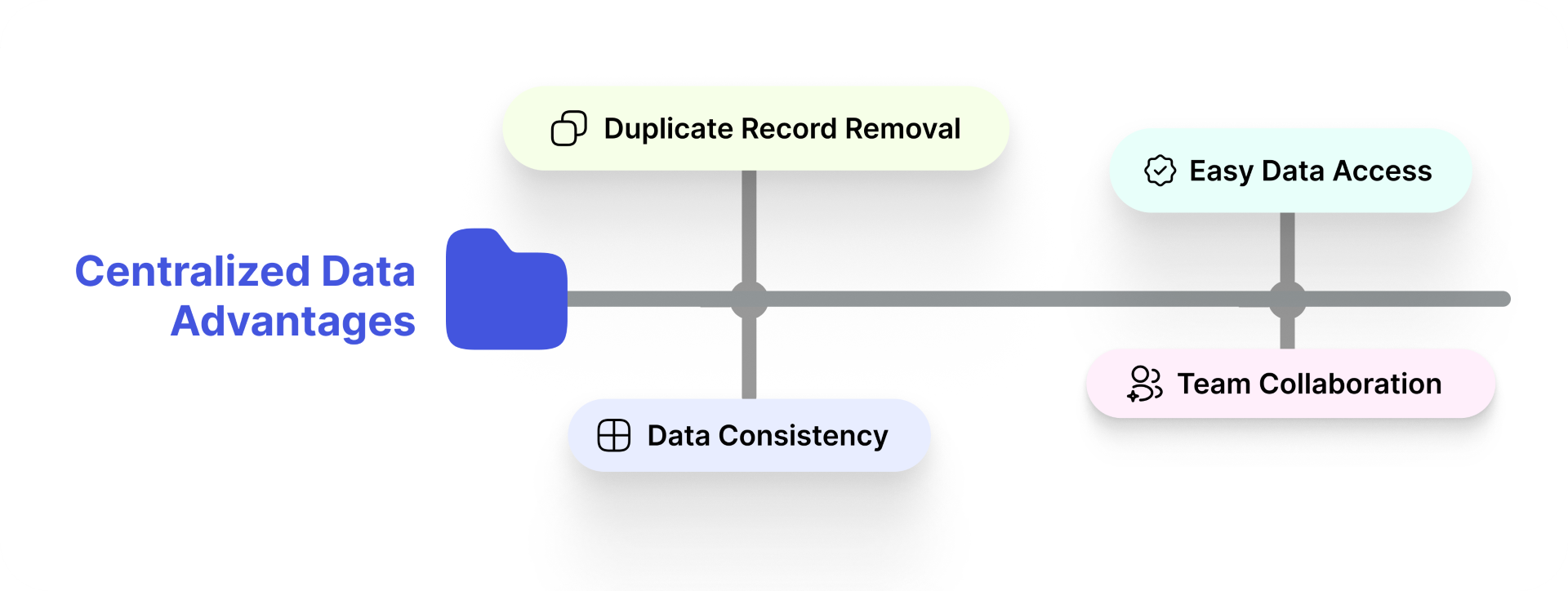
Benefits of Centralized Student Data
Centralization makes it easier to manage school data in a number of ways:
- Removes Duplicate Student Records
- Makes sure that all departments have the same data
- Makes it easier for administrators and faculty to get data. Makes it easier for academic and administrative teams to work together.
When all departments use the same student database, schools can run their businesses more efficiently.
2. Automating Institutional Data Collection
One of the most time-consuming parts of running a school has always been entering data by hand.
Many everyday tasks, like taking attendance and figuring out grades, require staff to enter or update information over and over again.
Modern student information system software automates a lot of these tasks, so schools can automatically gather and update information about themselves.
Some common automated workflows are:
- Keeping track of attendance
- Calculating grades and keeping track of grades
- Updates on enrollment
- Making Report Cards and Exam Results
Automation keeps student records up to date in real time and makes the work of administrative staff easier.
The Benefits of Automation in SIS Platforms
There are many benefits to automating school data management systems:
- Lessens the Need for Manual Administrative Work
- Reduces mistakes when entering data
- Keeps records consistent and makes operations run more smoothly.
When schools automate routine tasks, they can spend more time on academic planning and helping students instead of doing administrative work.
3. Giving people access to institutional data in real time
Static reports that have to be made by hand are often used in traditional reporting. The data in these reports may already be out of date by the time they get to administrators.
Dashboards and reporting tools in modern student information systems for schools let you see institutional data in real time.
Administrators and teachers can quickly get to information like:
- Statistics on attendance
- Data on how students are doing
- Numbers of Students Enrolled
- Records of Money
This real-time visibility makes it easier for departments to work together and speeds up decision-making.
Micro Insight
It can take weeks for administrators to find attendance problems or trends in academic performance when they rely on reports made by hand. SIS platforms with real-time dashboards help schools find problems early and fix them quickly.
For instance, administrators can find students whose attendance is dropping and step in before those problems start to hurt their grades.
4. Making reports and analytics for the institution
Another big benefit of student information system software is that it can make detailed reports and analytics.
For both operational management and compliance reasons, educational institutions need to report accurately.
SIS platforms help administrators make reports like these:
- Reports on Attendance Trends
- Analysis of Academic Performance
- Statistics on Enrollment
- Reports on the Graduation Rate
- Summaries of Finances
These insights help organizations look at their programs and make choices based on facts.
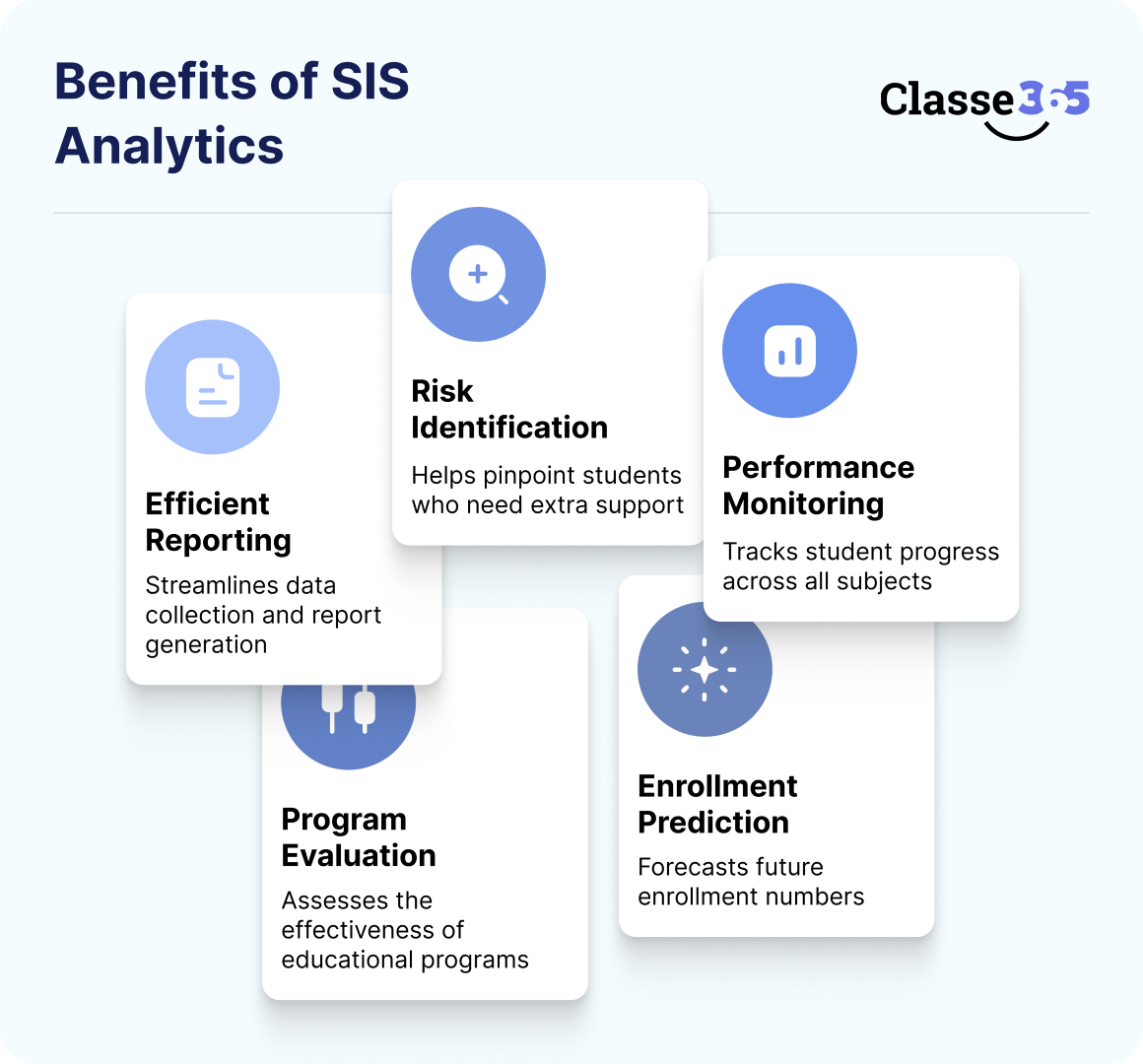
The pros of SIS analytics and reporting
Schools can use analytics to:
- Find Students Who Are At Risk
- Keep an eye on how well students are doing in all departments
- Check how well the program works
- Predict Enrollment Trends
Administrators can make reports right away from the SIS dashboard instead of having to gather data from many different places by hand.
This makes institutional reporting more accurate and efficient.
5. Making records more accurate and keeping them safe
It is very important for both academic administration and following the rules to keep accurate student records.
There is a much higher chance of data inconsistencies when schools use more than one system or do things by hand.
A student information system for schools makes data more accurate by having features like:
- Standardized Formats for Entering Data
- Calculating Grades Automatically
- Rules for Validating Data Fields
- Updates that happen automatically across systems
These systems make sure that student information stays the same across the whole school.
Micro Insight
When staff members move student records by hand between different software systems, they often make mistakes. SIS platforms lower this risk by keeping all data in one place and automatically updating records.
To make sure that academic reports are accurate, keep track of student progress, and follow education rules, you need to have accurate data.
6. Making data security and compliance stronger
Schools and colleges handle very private student information, such as academic records, personal identification information, and financial records.
To keep people’s trust and follow the rules, this data must be kept safe.
Modern student information systems have strong security features that protect the data of the school.
Some common security features are:
- Encrypted Databases
- Safe Cloud Storage
- Access Controls Based on Role
- Logs of Activity and Audits
- Authentication with more than one factor
These features make sure that only people who are allowed to see sensitive information can do so.
Schools can keep student records safe while still being open and responsible by using a secure school management data system.
Centralized systems also make it easier for schools to make compliance reports that accreditation bodies or government education authorities need.
7. Putting data from different educational systems together
Most schools and colleges use more than one digital platform to run their businesses.
Some of the systems that schools use are:
- LMS, or Learning Management Systems
- Software for admissions and enrollment, and Financial management platforms
- Systems for Exam Testing
When these systems work on their own, staff have to keep entering the same student information into different tools.
A modern student information system for schools is the main hub that connects these platforms.
An SIS lets data move automatically between apps by connecting with other systems.
Advantages of System Integration
Integration makes it easier to manage institutional data by:
- Getting rid of duplicate data entry
- Keeping student records up to date across systems
- Making reports more accurate
- Making institutional workflows easier
Pro Tip
When schools look at SIS platforms, they should put a lot of weight on those that have good integration features and APIs. These integrations make sure that data moves smoothly between the academic, admissions, and financial systems.
How to Pick the Right Student Information System for Your School
Choosing the right student information system software is a key part of making data management at your school better.
Before putting in place a SIS platform, schools should think about a number of things.
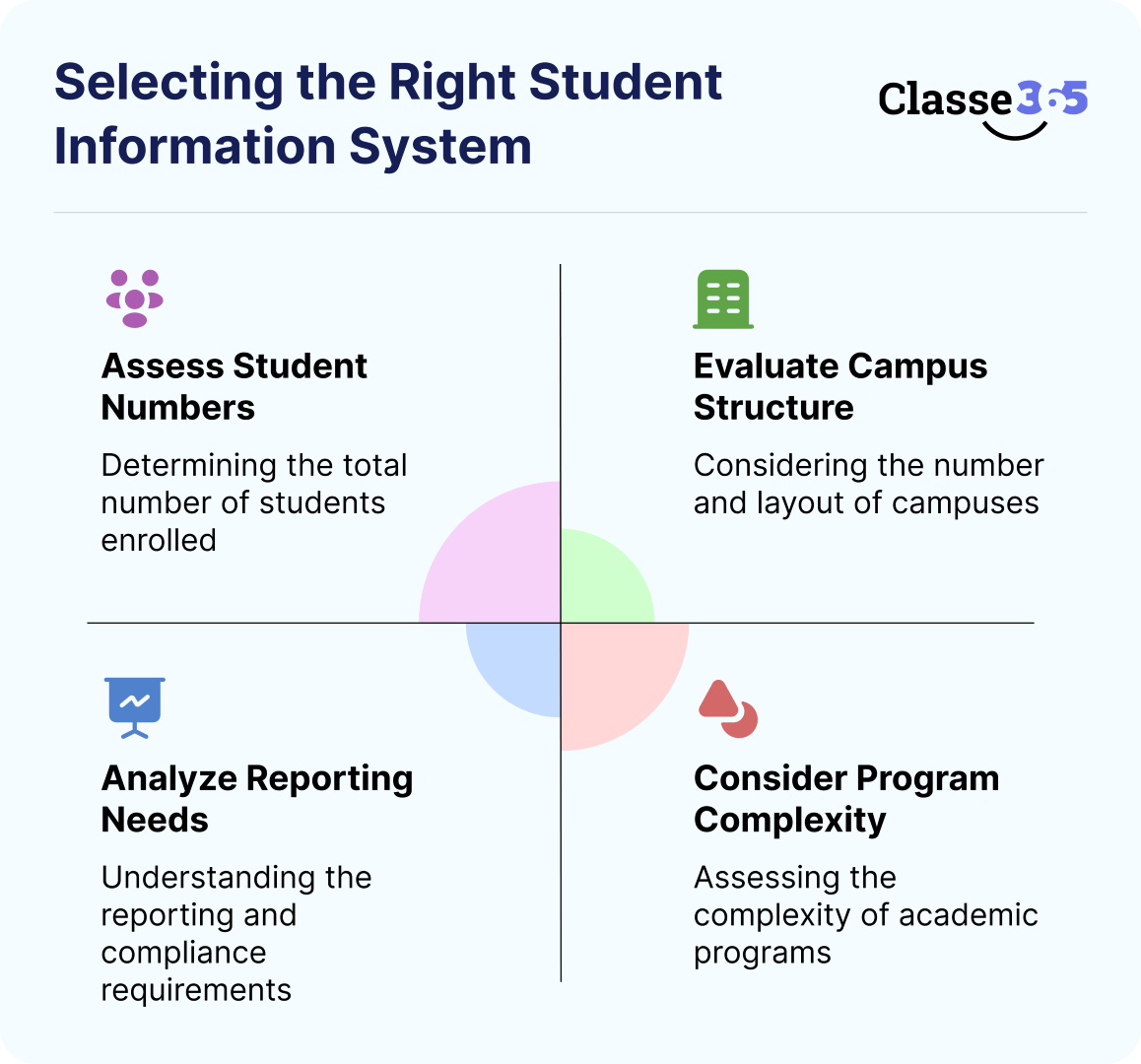
Check the data needs of the institution
Depending on their size and structure, different institutions need different types of data.
Some important things to think about are:
- The Number of Students
- How Many Campuses
- Requirements for Reporting and Compliance
- The complexity of academic programs
Knowing what these needs are helps schools pick a system that can handle their data well.
Put integration capabilities first
Many digital tools are used by schools at the same time. Choosing a SIS that works with your current systems helps keep your data ecosystem stable.
Look for platforms that work with:
- Systems for Managing Learning
- CRM Platforms for Admissions
- Systems for Finance and Billing
- Pick cloud-based solutions that can grow with you.
- Finance And Billing Systems
Pick cloud-based solutions that can grow with you.
Cloud-based student information systems for schools have a number of benefits, such as:
- Access to all data from one place
- Updates to the system automatically
- Better data security and the ability to grow with the institution
Scalable systems make sure that the platform can still meet the needs of the institution as the number of students grows.
Conclusion
As the amount of student data, academic records, administrative information, and financial transactions continues to grow, effective school data management has become very important for modern schools. When you have to handle this data by hand or across systems that aren’t connected, it can cause problems with efficiency, reporting, and security. A modern Student Information System (SIS) helps colleges and universities keep all of their data in one place and manage it all from one platform.
By using SIS software, schools can bring together student records from different departments, automate tasks like taking attendance and grading, make reports more accurate with real-time analytics, improve data security and compliance, and connect different systems like admissions, finance, and learning management. Schools can make faster, data-driven decisions while cutting down on administrative work and focusing more on helping students succeed and do better in school by better managing and seeing student data.
FAQ
What is a student information system?
A student information system (SIS) is a digital platform used by schools and universities to manage student data, including enrollment records, attendance, grades, and financial information.
How does an SIS improve data management in schools?
An SIS improves data management by centralizing student records, automating administrative workflows, and providing real-time reporting tools that help administrators access accurate institutional data.
What types of data are stored in a student information system?
Common data stored in an SIS includes student demographic information, academic records, attendance data, examination results, enrollment history, and financial records.
Why is centralized student data important for schools?
Centralized data ensures that all departments within an institution access consistent and accurate information, reducing duplication and improving collaboration between administrative and academic teams.
How does an SIS reduce administrative workload?
SIS platforms automate tasks such as attendance tracking, grade calculations, and report generation, reducing manual data entry and saving time for administrative staff.
Can student information systems generate academic reports?
Yes, most SIS platforms include reporting tools that allow administrators to generate reports on student performance, attendance trends, enrollment statistics, and financial data.
How do SIS platforms improve data accuracy?
SIS platforms improve accuracy through automated calculations, validation rules, and centralized data storage that ensures information remains consistent across the institution.
What security features protect student data in SIS platforms?
Modern SIS platforms typically include encryption, role-based access controls, secure cloud storage, and audit logs to protect sensitive student data.
Can student information systems integrate with LMS platforms?
Yes, many SIS platforms integrate with learning management systems, allowing academic data such as course registrations and grades to sync automatically.
What should schools look for when selecting an SIS?
Schools should evaluate SIS platforms based on scalability, integration capabilities, reporting features, data security, and their ability to support the institution’s operational needs.