




Schools and colleges deal with a lot of student information every day, from applications and enrollments to attendance, grades, financial records, and compliance reports. Using spreadsheets or separate technologies to manage these procedures can cause data silos, make administration less efficient, and slow down decision-making.
A good Student Information System (SIS) fixes this by putting all of the student data in one place and automating the job of the school. A modern student information system software, also called a student information management system, is a single platform that links admissions, academics, financing, and communication.
Schools and universities need SIS solutions with certain features that support the full student lifecycle, make academics more visible, and make operations run more smoothly in order to work well and grow digitally.
The 7 Essential Features Every Modern Student Information System Must Include
1. Managing Student Data in One Place
A current student data management system is the most important part of a good student information system (SIS). It keeps all student records safe and organized in a central student database software, which lets schools manage the full student lifecycle from one place.
This centralized system usually takes care of:
- Your Personal Information
- History of Enrollment
- Sign Up for Classes
- Records of Attendance
- Schoolwork
- Records of Discipline
- Money Moves
Putting all of these records in one place makes them the only place where the institution can find the truth. A single piece of student information system software lets departments like admissions, academics, finance, and administration all see the same real-time data.
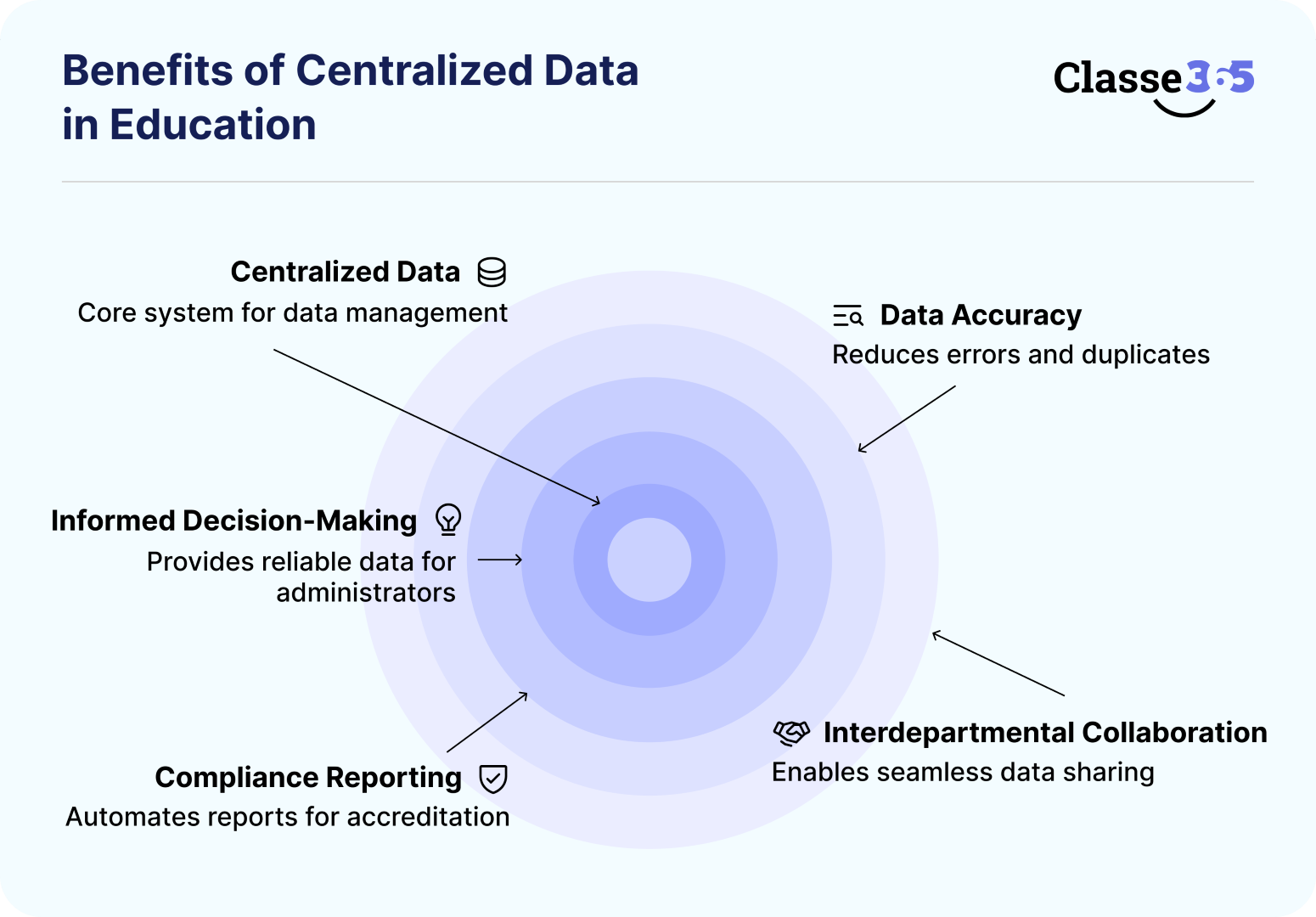
Why centralized data is important
A consolidated student record management system makes things better:
- Keeping one dependable student database helps keep data accurate, which cuts down on duplicate records and mistakes made by hand.
- Administrators can get reliable data for reporting and making decisions thanks to institutional openness.
- When different departments work together, the admissions, academic, and financial teams can all use the same up-to-date records.
Centralized data also makes it easier to report on compliance in education. Institutions in India often make reports for NAAC accreditation and for government databases like the UDISE+ reporting system. A unified education ERP automates these reports using student records that are already in the system, which makes it easier for administrators to do their jobs.
2. Online Admissions and Enrollment Management
The initial stage in a student’s journey with an institution is to get accepted. A modern online admissions management system makes this procedure easier for schools and universities by digitizing the entire application and enrollment process within a student enrollment management system.
Some important parts of an automated admissions system are:
- Online Application Forms: Students can fill out and send in their applications online. This cuts down on paperwork and speeds up the process for both applicants and administrators.
- Digital Document Submission: Applicants can upload their transcripts, certificates, and ID papers directly to the system, which lets admission committees look at them right away.
- Eligibility Verification: The system automatically checks to see if applicants meet the program’s requirements. This helps schools quickly find qualified candidates.
- Approval of Admissions: A structured digital process lets admissions teams review applications, approve candidates, and keep track of the flow of decisions.
- Confirmation of Enrollment: After a student is accepted, they get automated messages that confirm their enrollment and tell them how to do it. This makes it easier to get started.
These features make the admissions process a smooth digital enrollment process, which is good for both the school and the applicants.
Benefits of Automating Admissions
There are many benefits to schools that use automated software to enroll students:
- Faster Application Processing: Digital workflows speed up the process of reviewing and approving applications.
- Better Enrollment Visibility: Admission teams can see how many applications are coming in and how many are being processed right away.
- Fewer Errors Made by Administrators: Automation makes it less likely that people will make mistakes when entering data and writing documents by hand.
Advanced education management systems also have predictive enrollment analytics, which help schools figure out how to best recruit new students by looking at trends in applicants.
3. Managing attendance and making academic schedules
Monitoring attendance is still an important part of school. With a modern attendance management system for schools, teachers can use online or mobile devices to register attendance.
Automated attendance systems give:
- Tracking Attendance in Real Time
- Notifications of Absences Automatically
- Dashboards for Attendance Analytics
- Integration with school schedules
Attendance data is also used to keep track of academic progress, which helps schools find patterns like chronic absenteeism.
Managing schedules automatically
Many SIS platforms additionally have scheduling capabilities that give out:
- Rooms for classes
- Schedules for Faculty
- Timetables for Classes
- Calendars for Exams
These scheduling features are part of a larger set of academic operations software that makes sure that all of the resources on campus are used in the best way possible.
4. Managing Grades and Academic Performance
One of the most important things that schools should do is keep track of how well their students are doing in school. Modern software for measuring academic performance replaces paper gradebooks with digital systems that keep track of:
- Scores on Tests
- Internal Evaluations
- How well you do in your classes
- Calculations for GPA
These systems work as a way to keep track of students’ grades and automatically make a digital report card system.
Academic ideas based on data
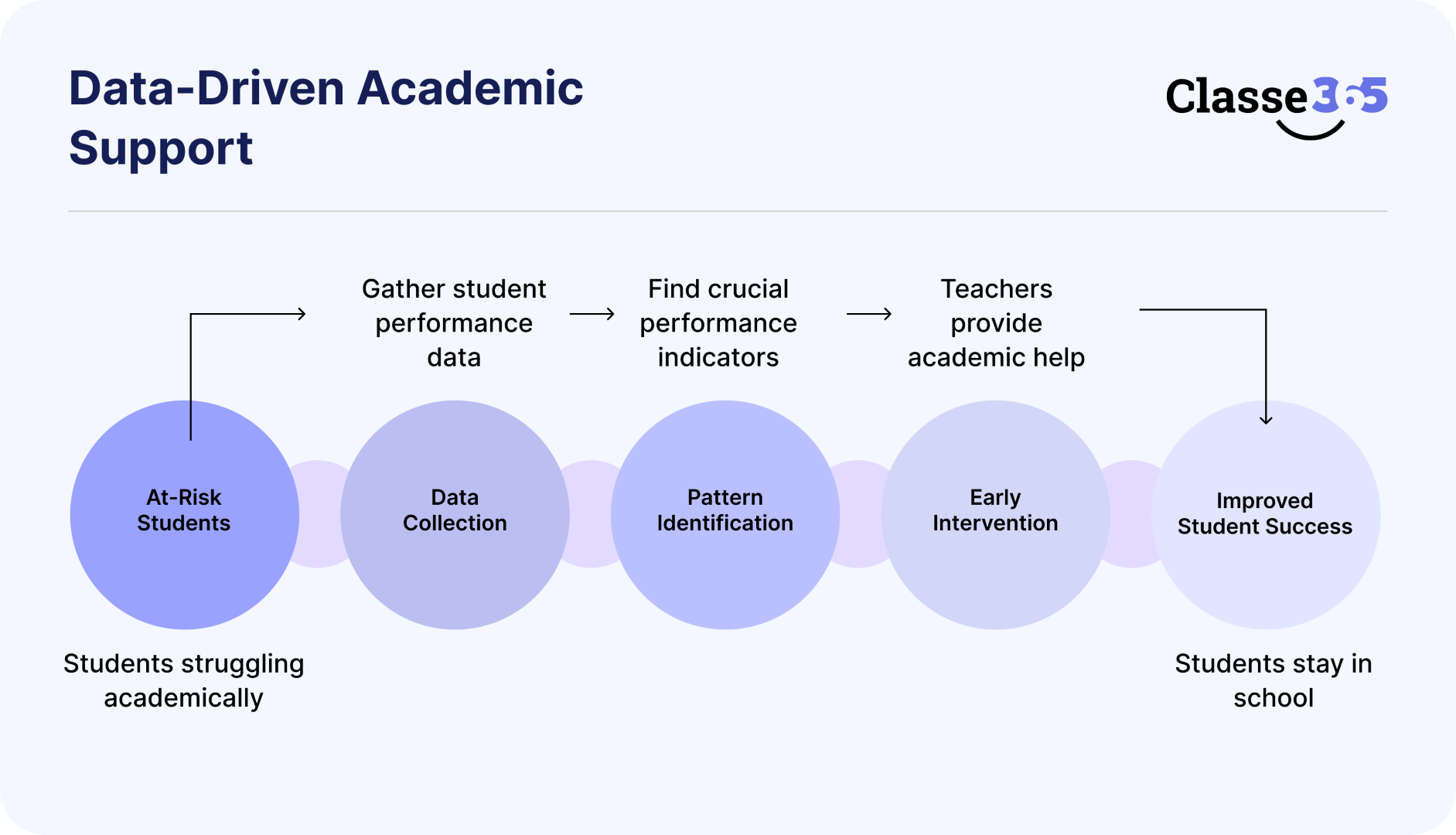
Institutions may keep an eye on and assess student progress in real time using modern academic performance analytics tools included into a student information system. These systems employ school data to find crucial performance indicators such as children who are at risk of failing, grades that are dropping, and patterns in learning improvement.
Institutions can find possible academic problems early by looking at patterns in attendance, exams, and engagement when they use AI-powered student analytics. These insights let teachers take action quickly by giving students the academic help they need, which can help them stay in school, do better in school, and overall be more successful.
5. Keeping an eye on your money and handling fees
Schools and colleges handle a lot of money during the school year that is related to students. These usually include things like tuition, test fees, room and board, transportation costs, and other payments to the school. Doing these transactions by hand could lead to delays, mistakes in math, and confusion about money.
A modern school fee management program makes this process easier by automating billing, keeping track of payments, and making financial reports all in one place. Schools can do all of their fee-related work in one place by using safe payment gateways and digital billing systems.
Here are some important money skills:
- Automated Fee Invoicing: The system automatically makes fee invoices based on things like how many students are enrolled, what courses they choose, or what the school rules are. This means that less work needs to be done by hand.
- Digital Payment Processing: Built-in payment gateways let parents and students pay fees online, which speeds up and makes transactions easier.
- Payment Reminders: Automated reminders let parents know when payments are due or coming up, which helps schools get the money they need faster.
- Financial Analytics Dashboards: Centralized dashboards let administrators see real-time financial reports, keep track of payments, and keep an eye on the school’s income.
Automated fee management systems make it easier to collect fees, less likely to make accounting mistakes, and more open about finances. They also help parents by letting them pay safely online through student and parent portals that are already set up.
6. Communication Portals for Students, Parents, and Teachers
Good communication is important for keeping strong ties between institutions and their stakeholders.
Some of the communication features that come with modern SIS platforms are:
-
- Software for Student Portals
- Systems for Parent Portals
These tools act as a central place for school communication where you can quickly distribute announcements, homework, attendance warnings, and grade updates.
Improving engagement
Communication platforms improve:
- Tracking Student Engagement
- Parents’ Involvement in School
- Collaboration between faculty
Integrated messaging technologies also serve as a way for teachers and administrators to talk to one other, making it easier for them to work together.
All of these aspects work together to offer a complete platform for student participation at the school.
7. Analytics and Reporting for Institutions
One of the best things about modern SIS platforms is that they can analyze data.
An integrated academic analytics dashboard gives administrators information about important institutional metrics, such as:
- Trends in Enrollment
- How well you do in school
- Statistics on attendance
- How well the business does financially
These insights are the basis of education data analytics, which lets schools make smart choices based on data that is always up to date.
Insights driven by AI
Advanced systems now use predictive student analytics and student success analytics to find students who are likely to drop out.
Using past data and performance patterns, these technologies can help estimate how well students will do.
Administrators can step in early, which will help students stay in school and do better in school.
Advanced Capabilities in Modern Student Information Systems
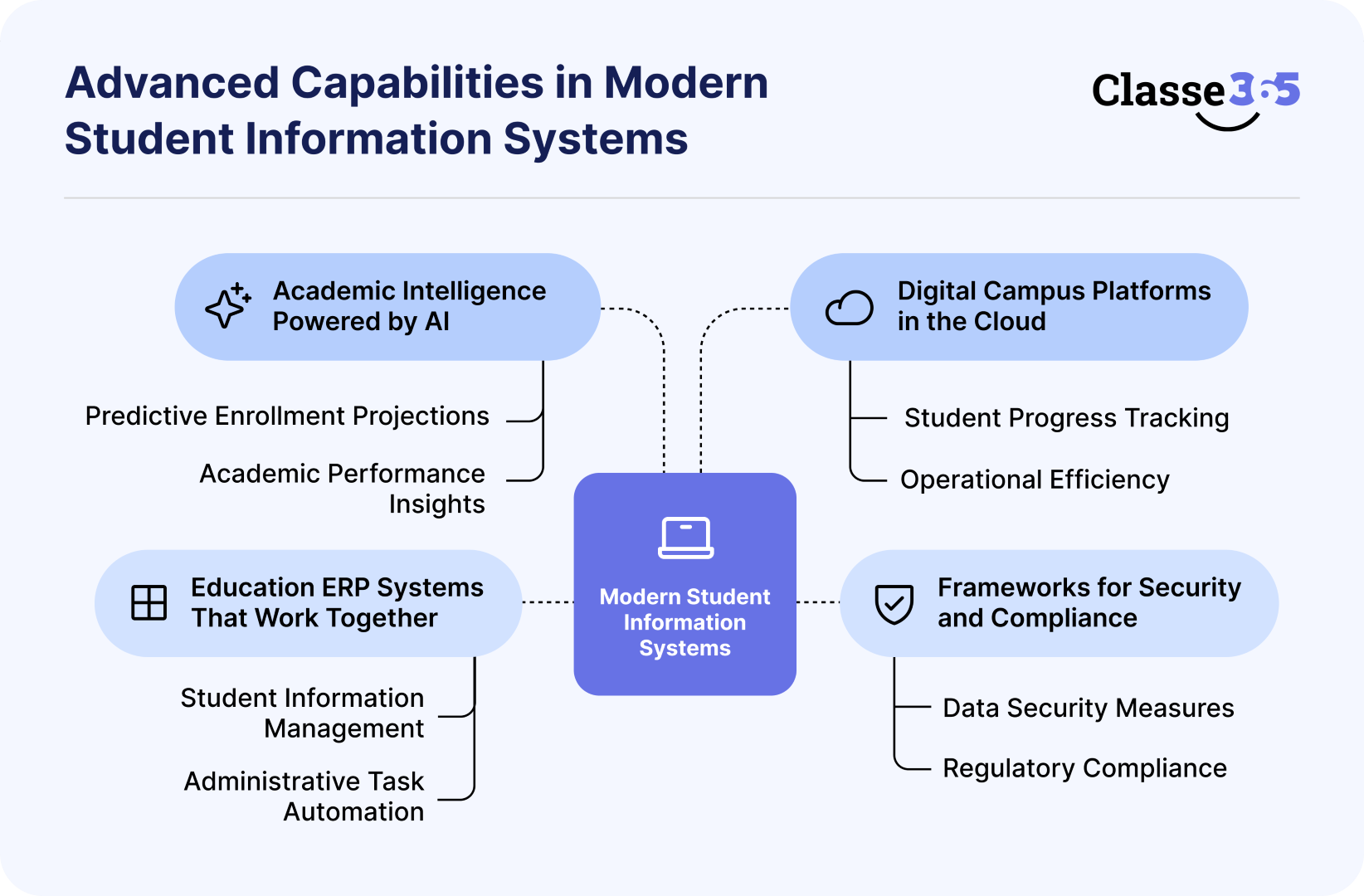
Modern Student Information Systems (SIS) do more than only keep records and automate administrative tasks. More and more, institutions are using advanced tools like AI-powered student analytics, predictive enrollment projections, academic performance insights, and automated compliance reporting to help them make decisions based on data. These technologies turn old student information system software into a full-fledged education ERP and digital campus platform that lets schools keep track of student progress, make operations run more smoothly, and swiftly adapt to new academic and regulatory needs.
Academic Intelligence Powered by AI
AI-powered student analytics are currently used by modern student information systems to turn data from schools into useful information.
Some of the most important features are:
- Predictive Enrollment Analytics uses data from past admissions to make predictions about future enrollment trends and help with planned recruitment.
- Academic performance forecasting looks at grades, attendance, and tests to find children who are at risk early on.
- Personalized Learning Insights gives instructors data-driven suggestions on how to meet the needs of each student.
AI-powered SIS software help schools keep students in school, improve their grades, and make decisions based on data by finding patterns in how students act and do in school.
Digital Campus Platforms in the Cloud
More and more, modern student information systems are built on cloud-based infrastructure. This lets schools safely access student data from anywhere. A digital campus platform that runs in the cloud does away with the need for on-premise servers and makes sure that academic and administrative data is always available.
Some of the most important benefits are:
- Remote Access for Faculty and Administrators: Staff can safely access student records, attendance, grades, and reports from anywhere.
- Automatic Data Backups: Cloud systems back up institutional data on a regular basis, which lowers the danger of losing data.
- Scalable Infrastructure: Institutions can easily add more resources to the platform as the number of students or the size of the institution’s activities grows.
- Lower IT maintenance costs: Cloud deployment does away with the requirement for expensive server infrastructure and human system maintenance.
Cloud-based campus management solutions also let people access the platform from their phones and web portals, which makes it easier for administrators, staff, students, and parents to use it.
ERP systems for schools that work together
A lot of modern schools use more than one digital tool for learning, finances, human resources, and academics. A robust Student Information System (SIS) integrates with multiple platforms to create a cohesive education ERP software ecosystem.
Here are some important integrations:
- Across different academic platforms, Learning Management System (LMS) keep track of assignments, activities, and course information.
- Finance Platforms: These are systems that connect to each other to handle fees, billing, and financial reporting.
- HR Systems: Combines information about faculty records, payroll, and managing staff.
- Digital Libraries: Links student profiles to library access and use of resources.
These connections let all of the school’s data move easily between departments, making it possible to have one campus administration system.
Frameworks for Security and Compliance
Student records contain a lot of private and academic information. A secure student information system software must have strong ways to protect education data in order to keep institutional information safe.
Some important security features are:
- Encrypted Databases: This keeps student records safe by encrypting private data.
- Role-based access controls limit who can use the system based on their job, like an administrator, faculty member, or staff member.
- Secure Authentication Systems: These systems keep people who shouldn’t be able to get in by using secure login protocols and multi-factor authentication.
Schools should also put platforms that protect student data and work as a FERPA-compliant SIS at the top of their lists. These protections keep student information safe and make sure that the school follows the rules for education data set by the world.
Advantages of Using a Student Information System
Institutions that use current Student Information System (SIS) platforms see big benefits in how well they run, how they manage data, and how engaged students are. A well-implemented student information system software helps schools run more accurately, clearly, and in sync by automating important academic and administrative tasks.
Less work for the administration
Automation gets rid of boring duties like keeping track of attendance by hand, figuring out grades, and making reports. By digitizing these processes, schools and universities make things easier for faculty and staff, letting them spend more time on organizing lessons and helping students.
Better accuracy of data
When different departments have their own databases, they can sometimes have duplicate entries and other problems. A centralized student data management system fixes these problems. With one central place for all student information, schools can keep accurate records for admissions, academics, and finances.
Making better choices
New SIS platforms come with dashboards for education data analytics that provide you real-time information about enrollment trends, academic performance, and operational metrics. These insights help administrators make quicker, data-driven choices about things like designing the curriculum, allocating resources, and growing the school.
Better student involvement
Integrated student and parent portals, as well as communication tools, make it easier for students, parents, and teachers to talk to one other. Notifications, academic updates, and tracking student involvement are some of the features that assist schools keep better academic communication and help students do well.
Building a Scalable Digital Campus with the Right Student Information System
Schools and colleges today need more than just simple ways to keep track of records.
A modern student information system software platform is a full education ERP software solution that takes care of everything from admissions to keeping in touch with alumni.
By setting up a system with the right features, like centralized student data management, automated admissions, attendance tracking, academic performance analytics, financial management, communication portals, and reporting dashboards, schools can create a digital campus platform that can grow with them.
As education becomes more data-driven, schools that use modern campus management systems and AI-powered education management software will be better at running their schools, getting academic insights, and helping students succeed than their competitors.
FAQ
What is a system for student information?
A student information system is a program that schools use to keep all of their records about students in one place. This includes information about admissions, attendance, grades, and finances.
What are the most important features of student information system software?
Some of the main features are managing student records, automating admissions, keeping track of attendance, managing grades, managing fees, communication portals, and analytics dashboards.
What does SIS software do to help schools?
SIS software makes things run more smoothly by automating administrative tasks, bringing together all student data, allowing for real-time reporting, and making it easier for everyone to talk to each other.
Can you trust a student information system?
Modern SIS platforms have security features like encrypted databases, role-based access controls, and following global standards for protecting student privacy in education.