




An assignment management system is software that helps teachers create, distribute, track, and grade student work from one place. The best platforms go further by automatically connecting assignments to grades, attendance, and student records. This list covers seven of the most widely used options in 2026, what each does well, and who they work best for.
What to Look for in an Assignment Management System
Before comparing platforms, it helps to know what actually matters. Here is a quick checklist:
| Feature | Why It Matters |
| Assignment creation and distribution | Core function; should be intuitive for teachers |
| Submission tracking | Real-time visibility into who has and has not submitted |
| Grading and feedback tools | Inline comments, rubrics, and grade export |
| Integration with SIS or LMS | Keeps grades and records in sync automatically |
| Parent and student portals | Keeps everyone informed without extra staff work |
| Mobile accessibility | Teachers and students need access from any device |
| Automated reminders | Deadline alerts without manual follow-up |
According to Strategic Revenue Insights, the global educational management software market is projected to reach USD 25 billion by 2033, growing at a CAGR of 10.5% from 2025. Institutions are moving away from single-function tools toward platforms that connect every part of academic life.
A Quick Overview of 7 Most Popular Assignment Management Systems
| Platform | Best For | Pricing | SIS Integration | AI Features | Free Trial |
| Classe365 | All institution types, full integration | From $100/month | Native | Yes | 14 days |
| Canvas LMS | Higher ed and K-12 | Custom | Via LTI | Limited | Yes |
| Moodle | Tech-capable institutions | Free / from $123/year | Via plugins | Via plugins | Yes |
| Google Classroom | K-12, Google Workspace users | Free | Limited | Limited | N/A |
| Blackboard Ultra | Higher ed, enterprise | Custom | Via LTI | Yes (premium) | 30 days |
| D2L Brightspace | Competency-based learning | Custom | Via LTI | Yes | Yes |
| Sakai | Community-governed universities | Free | Via LTI | Limited | N/A |
The 7 Most Popular Assignment Management Systems in 2026
-
Classe365
Best for: K-12 schools, universities, academies, and corporate learning teams that want assignment management connected to their full student record.
Classe365 is more than an assignment management system. It is a fully integrated platform where assignment workflows connect directly to the learning management system, student information system, attendance tracking, and fee management in one database.
Teachers create and distribute assignments within the LMS. Students submit work, and grades feed automatically into the gradebook and student record. Parents see results through the parent and student portal without anyone exporting a report.
According to a Classe365 blog on top SIS software, institutions using Classe365 typically cut administrative processing time by 20 to 35%.
Key features:
- Assignment creation, distribution, and submission tracking within the LMS
- Grades sync automatically to the student record
- AI-driven performance analysis across assignments, attendance, and grades
- Parent portal with real-time assignment and grade visibility
- Automated deadline reminders via SMS and email
- Supports 100+ languages
Pricing: Core module from $100/month. 15-day free trial, no credit card required.
-
Canvas LMS

Best for: Higher education institutions and K-12 schools looking for a polished, widely supported cloud LMS.
Canvas, built by Instructure and acquired by KKR in a $4.8 billion deal in 2024, is one of the most widely used platforms in North American higher education. It handles assignment creation, submission, peer review, and grading through an intuitive interface that teachers and students pick up quickly.
Key features:
- SpeedGrader for inline feedback and annotation
- Rubric-based grading
- Assignment groups and weighted grades
- Integration with Google Drive, Microsoft 365, and third-party apps via LTI
- Mobile app for teachers and students
Pricing: Custom pricing. Canvas Free for Teachers is available for individual educators.
-
Moodle
Best for: Institutions with technical resources that want an open-source, customisable platform.
Moodle reached 500 million registered users in December 2025, making it one of the most widely deployed LMS platforms globally, according to MooDIY’s 2026 LMS comparison. It is open-source, which means your institution controls the hosting and customisation. Assignment management in Moodle is flexible and supports file submissions, online text, and group work.
Key features:
- Multiple submission types: file upload, online text, group submissions
- Offline grading with grade import
- Rubrics and marking guides
- 2,700+ plugins available for extended functionality
- H5P support for interactive assignments
Pricing: Free to self-host. MoodleCloud starts at $123.28 annually for 50 users.
-
Google Classroom
Best for: Schools already in the Google Workspace ecosystem looking for a free, straightforward assignment tool.
Google Classroom is widely used in K-12 settings because it is free, simple, and integrates seamlessly with Google Docs, Drive, and Meet. Teachers create assignments, students submit through Drive, and feedback happens directly within Google Docs.
Key features:
- Assignment creation linked to Google Docs, Slides, and Forms
- Stream-based class communication
- Google Meet integration for virtual classes
- Grade export to Google Sheets
- Free for institutions using Google Workspace for Education
Pricing: Free with Google Workspace for Education. Paid tiers available with advanced features.
-
Blackboard Learn (Ultra)
Best for: Higher education institutions and government organisations requiring enterprise-grade features and compliance tools.
Blackboard Learn, now operating under Anthology after emerging debt-free in February 2026, offers a comprehensive assignment and assessment environment through its Ultra experience. It is built for large institutions with complex needs, including accessibility compliance and AI-powered content tools.
Key features:
- Inline grading with annotation and rubrics
- AI Summarize and Video Studio (premium add-ons)
- Ally accessibility checker built in
- SCORM and LTI support
- Advanced analytics and reporting
Pricing: Custom pricing. 30-day free trial available.
-
D2L Brightspace
Best for: Institutions focused on competency-based education, accessibility, and data-driven learning.
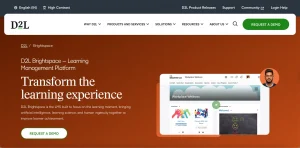
D2L Brightspace is a cloud-based LMS known for its accessibility features and adaptive learning tools. Its assignment management system supports video assignments, game-based learning, and detailed analytics on student engagement and performance.
Key features:
- Video assignment submission and feedback
- Competency-based grading
- Release conditions: assignments unlock based on prior completion
- Detailed learner engagement analytics
- Strong accessibility features built in as standard
Pricing: Custom pricing. Free trial available.
-
Sakai
Best for: Universities that want a community-governed, open-source platform built specifically for higher education.
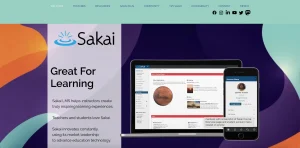
Sakai is developed by the Apereo Foundation, a community of universities and colleges. It offers course management, assignment tracking, gradebook tools, and assessment features built with academic governance in mind. Smaller than Moodle in market share but respected in university settings that value open standards and community input.
Key features:
- Lessons, Assignments, and Tests and Quizzes as core modules
- Gradebook with rubric support
- LTI 1.3 and open REST APIs
- SSO via SAML or OIDC
- Community-driven development with no vendor lock-in
Pricing: Free and open-source. Hosting and support costs vary by provider.
How to Choose the Right One for Your Institution
The right assignment management system depends on what you already have and what you are missing. If your institution runs separate tools for the SIS, LMS, and finance, and you are spending significant time reconciling data between them, a fully integrated platform like Classe365 is worth evaluating. The best student information system for higher education connects assignment workflows to the full student record, not just the gradebook. According to Gartner’s higher education LMS reviews, the LMS serves as the central hub for teaching and learning, and institutions increasingly expect it to connect to every other institutional system.
If you are already deep in the Google Workspace ecosystem and need something free and fast for K-12, Google Classroom covers the basics without extra setup.
If your institution has a technical team and wants maximum customisation control, Moodle or Sakai give you that flexibility without vendor dependency. If accessibility compliance and enterprise-grade reporting are non-negotiable, Blackboard Ultra or D2L Brightspace are built for that level of institutional complexity.
What none of the standalone tools do natively is connect assignment management to admissions, fees, attendance, and alumni records in one system. That is the gap a fully integrated platform fills. Classe365’s degree audit module tracks each student’s assignment completion progress toward graduation in real time. The finance and accounting module connects academic progress to fee records automatically. And the alumni module keeps that relationship going after graduation. For institutions where those silos are already causing problems, that connection is usually where the real time saving happens.
FAQs
What is an assignment management system?
Software that allows teachers to create, distribute, and grade assignments while tracking student submissions in one place. The best platforms connect assignment data to the broader student record automatically.
What is the difference between an LMS and an assignment management system?
An LMS is broader. It covers course delivery, content, communication, and assessments. An assignment management system is a specific function within an LMS or SIS that handles the create, submit, and grade workflow. Most modern platforms include both.
What is the best education management software for universities?
It depends on your institution’s needs. For full integration across admissions, student records, LMS, and finance, Classe365 is designed for that. For standalone LMS with strong assignment tools, Canvas and Blackboard are widely used in higher education.
How does assignment management system software improve student outcomes?
It gives students clear deadlines, instant submission confirmation, and fast feedback. It gives teachers visibility into who has not submitted before the deadline passes. And when connected to attendance and grade data, it helps advisors identify at-risk students earlier.
What is the best student information system for higher education?
The best SIS for higher education connects student records, assignment data, attendance, fees, and communication in one system. Classe365, Canvas with SIS integrations, and Blackboard are among the most used in higher education settings globally.
Can a small school afford an assignment management system?
Yes. Google Classroom and Moodle are free. Classe365 starts at $100 per month for the core module with the LMS available as an add-on. Most platforms offer free trials so you can test before committing.
Does assignment management software work for online and hybrid learning?
Yes. All seven platforms in this list support online submission, virtual class integration, and remote grading. Most offer mobile apps for students and teachers.
How important is SIS integration for assignment management?
Very. Without SIS integration, grades have to be manually transferred between systems. With native integration, a submitted and graded assignment updates the student record automatically. This saves time and removes the risk of data entry errors.