




Learning vs teaching is a common comparison in education because both play a crucial role in how knowledge is shared, acquired, and applied. While teaching focuses on guiding and imparting knowledge, learning is the process of understanding, retaining, and using that knowledge in real-world situations.
In research conducted by the Proceedings of the National Academy of Sciences (PNAS), it was established that students who learn actively tend to do better than those in passive learning situations. These findings further emphasize that the more engaged a learner is, the better the learning process.
Active learning takes place in academic institutions through online mediums and personalized learning pathways. In this guide, we’ll explore what learning and teaching mean, how they differ, the most common learning and teaching styles, and why both play a critical role in student success.
Learning vs Teaching: Quick Comparison
| Learning | Teaching |
| Acquiring knowledge, skills, or understanding | Delivering knowledge, guidance, and instruction |
| Learner-driven process | Teacher-driven process |
| Focuses on understanding and application | Focuses on facilitation and explanation |
| Requires active participation | Requires planning and instruction |
| Continues throughout life | Occurs when knowledge is shared |
| Measured through outcomes and performance | Measured through learner success and engagement |
Understanding learning vs teaching helps educators create more effective learning experiences and better student outcomes.
What is learning?
In simple words, learning is the process of acquiring knowledge or skills through study, by being taught, or from experience. We learn throughout our lives whether we realize it or not. From learning to walk, talk, and interact with friends, to learning a new language, a skill, an instrument, or enhancing our capabilities from past experiences—there is an opportunity to learn every day and in all circumstances. It’s what makes us human.
Learning is an internal activity that’s more self-directed and self-motivated. How you learn depends on the way information is presented to you and whether you are motivated to accept, or imbibe it.
Different Learning Styles
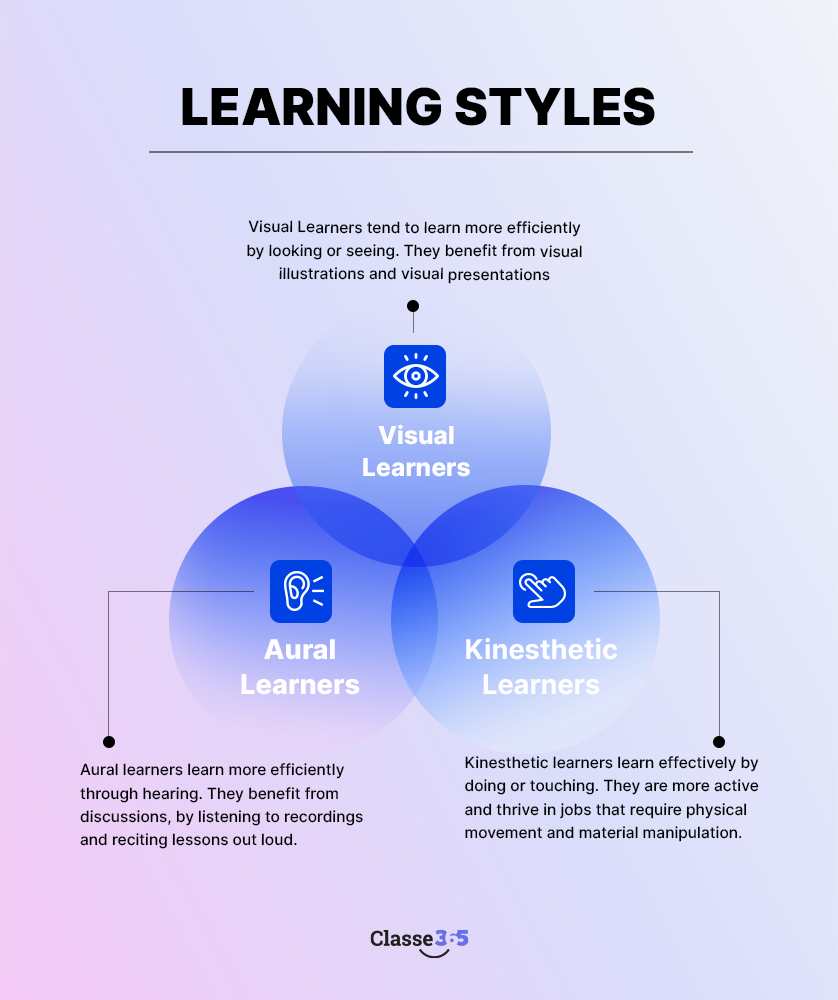
Every learner processes information differently. Understanding learning styles allows educators to design more inclusive and effective learning experiences that improve comprehension, engagement, and knowledge retention.
Visual Learners
Visual learners absorb information best through charts, diagrams, videos, infographics, and visual demonstrations.
Auditory Learners
Auditory learners learn most effectively through listening, discussions, lectures, podcasts, and verbal explanations.
Reading and Writing Learners
These learners prefer written content such as books, articles, notes, and assignments to understand concepts.
Kinesthetic Learners
Kinesthetic learners learn through practical activities, experimentation, simulations, and hands-on experiences.
Modern educational platforms help institutions accommodate multiple learning styles through interactive content, assessments, discussion forums, multimedia resources, and personalized learning experiences.
What Is Teaching?
Effective teaching goes beyond delivering information. It involves creating learning environments that encourage participation, critical thinking, collaboration, and knowledge retention. Research on student-centered teaching practices has found positive associations between teacher collaboration, school innovation, and learner engagement, highlighting the growing shift toward more interactive teaching approaches.
Guide to teaching styles
There’s a Chinese proverb: “A thousand teachers, a thousand approaches.” This proverb resonates with the truth, as every teacher is unique—their teaching methods and approaches will vary from each other. The most common approaches to teaching are teacher-centered and learner-centered.
The teacher-centered approach sees the teacher as the only reliable and sole source of information, in other words, this approach is dominated by the teacher. In the learner-centered approach, the student takes the lead in terms of where the information comes from. A platform like that of Classe365’s encourages students to take charge of their learning journey by providing tools that support personalized feedback and progress tracking. There are other approaches to teaching and the disciplines of these approaches vary. We have outlined these different teaching and learning strategies in the table below.
| Learner Centered | Teacher Centered |
| Interactive | Teacher Dominated |
| Integrated | Collaborative |
| Direct | Guided |
What’s the difference between learning and teaching?
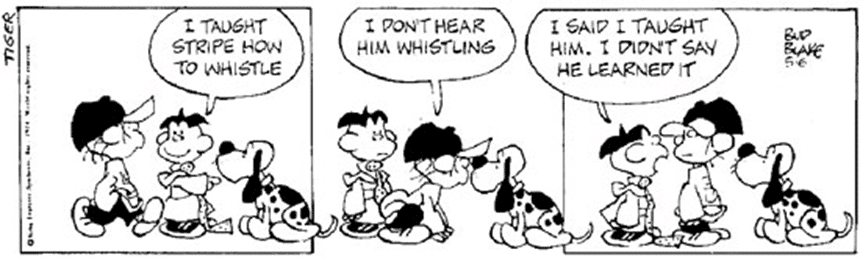
Looking at real-world examples of learning vs teaching makes it easier to understand how knowledge is delivered, absorbed, and applied. One of the reasons why it is difficult to discern the difference between teaching and learning is the traditional nature of education. Back in the day, in a traditional classroom setup, teaching took on a more active role and learning was more passive. Learning was all about memorization. The answers were either right or wrong. Today, learning has evolved. Answers are no longer black or white. Learning has become a shared activity between teachers, students, and parents. Classroom experience revolves around students taking ownership of their learner journey.
Learning vs Teaching: Real-World Examples
The difference between learning and teaching becomes clearer when we look at how knowledge is shared and applied in real-life situations.
Example 1: Learning vs Teaching in Mathematics
Imagine a mathematics teacher introducing algebra to a classroom. The teacher explains formulas, demonstrates how equations work, and answers students’ questions. This is teaching—the process of guiding students and providing the knowledge they need to understand a concept.
Learning happens when students take that knowledge and use it independently. For example, a student who can solve algebraic equations, identify mistakes, and apply the same concepts in exams or real-world situations has successfully learned the material.
Example 2: Learning vs Teaching in Programming
A programming instructor may teach students how loops, functions, and variables work by explaining concepts and demonstrating code examples. This is teaching.
Learning occurs when students use those concepts to build a website, create an application, or solve a coding challenge on their own. The ability to apply knowledge and solve problems independently is a key indicator that learning has taken place.
Example 3: Learning vs Teaching in Sports
A coach teaches players the rules of a game, demonstrates techniques, and provides feedback during practice sessions. However, learning happens when players apply those techniques during a match, make decisions under pressure, and improve their performance over time.
These examples highlight a simple distinction: teaching focuses on providing knowledge and guidance, while learning is demonstrated through understanding, application, and real-world performance.
5 Key differences of Learning vs Teaching
While learning and teaching are closely connected, understanding Learning vs Teaching is important because each serves a distinct purpose in the educational process.
The goal
The primary goal of teaching is to share knowledge or skills whereas learning involves applying the knowledge acquired.
The extent of authority
When compared to learners, teachers possess higher authority as they are experts in an area of study.
Dependence
A student can learn even without a teacher imparting knowledge to them but teachers need students to share their expertise with.
Feedback
In teaching, feedback is provided for the student’s improvement. However, in learning, feedback is received and acted upon.
Duration of existence
Learning stops when a person dies but that’s not the case with teaching. A teacher’s lessons may continue to inspire learners even after they have passed away.
Why Both Learning and Teaching Matter
Learning and teaching are not competing concepts, they are complementary parts of the educational process. Effective teaching creates opportunities for meaningful learning, while successful learning validates the effectiveness of teaching.
Modern educational institutions increasingly use technology to strengthen both processes. Integrated platforms that combine student information management, communication tools, assessments, and learning management capabilities help educators deliver better experiences while supporting student success.
When teaching and learning work together, institutions can improve engagement, retention, academic performance, and long-term educational outcomes.
The Takeaway
The learning vs teaching debate is not about which is more important. Instead, it highlights how both processes work together to support student growth and academic success. The difference between learning and teaching lies in their purpose. Teaching focuses on guiding, facilitating, and sharing knowledge, while learning involves acquiring, understanding, and applying that knowledge.
Both are essential for educational success. Teaching provides direction and structure, while learning transforms information into meaningful understanding and practical skills. As education continues to evolve, institutions that support both effective teaching and active learning will be better positioned to improve student outcomes and create engaging educational experiences.
With Classe365 on board, you can transform the way learning is imparted and manage educational activities with ease. Request for a demo today.
FAQ
1. What is the main difference between teaching and learning?
The difference between learning vs teaching is that teaching focuses on sharing knowledge and guidance, while learning focuses on acquiring, understanding, and applying that knowledge.
2. Can learning happen without teaching?
Yes. Learning can occur through self-study, observation, practice, and experience without formal teaching. However, teaching can accelerate and structure the learning process.
3. Why is learning considered the end goal of teaching?
Teaching is effective only when it leads to learning. The purpose of teaching is to ensure that learners gain the skills, knowledge, and understanding they need to apply in real-life scenarios.
4. What are the most common teaching styles?
The two primary teaching styles are teacher-centered and learner-centered approaches. Teacher-centered focuses on the instructor as the main source of information, while learner-centered encourages students to take ownership of their learning.
5. How do different learning styles affect education?
Every learner has a preferred way of absorbing information—visual, auditory, kinesthetic, or reading/writing. Understanding these styles helps educators adapt teaching methods for better engagement and results.